Plant the Seeds of Success With Proper Planter Setup
May 12, 2026
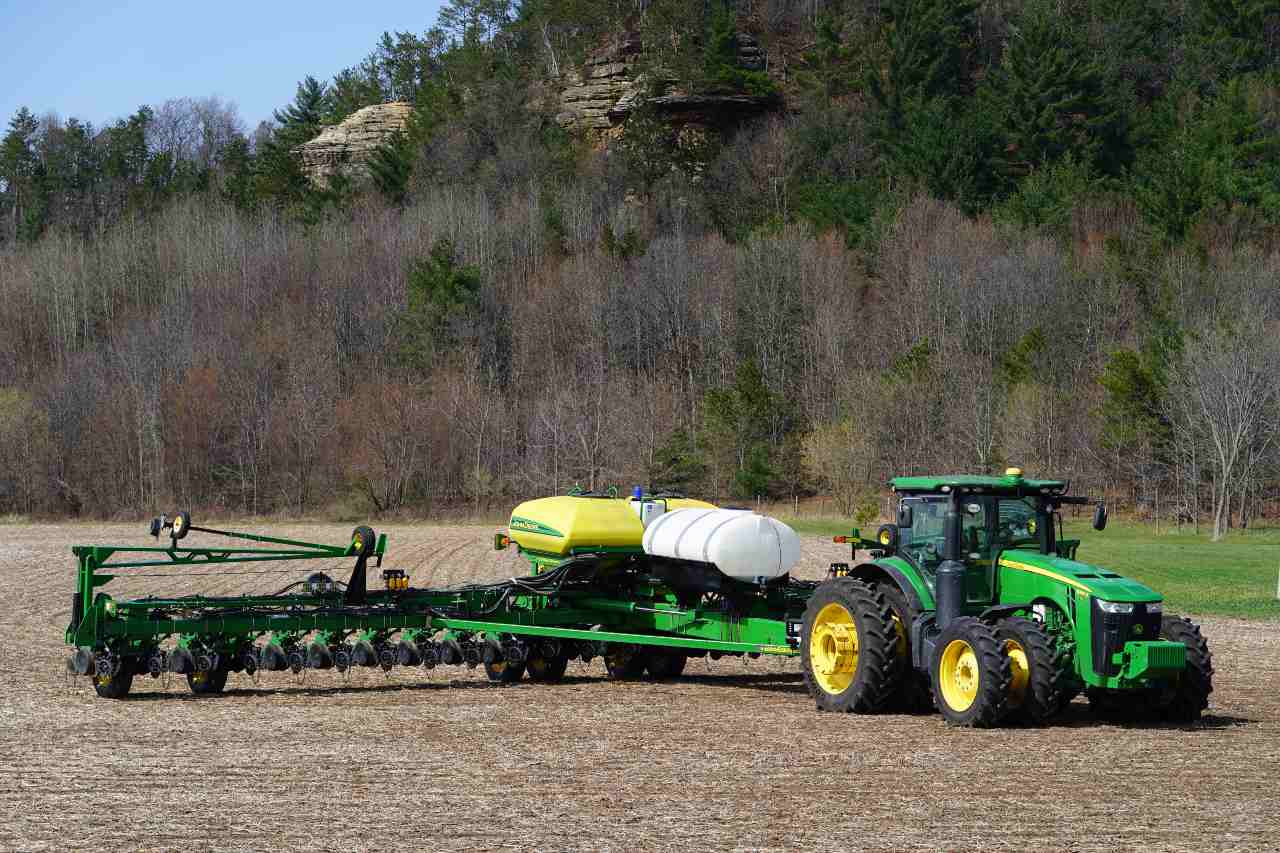
Plans are created. Seed should be in your sheds. The snow banks are all melted, hopefully.
“I can still see snow piles where I pushed snow this winter, and we got a fresh couple of inches in April,” said Mike Slater, Federated agronomy sales rep. “But it’s still time to start executing your plans.”
That execution begins with your planter setup.
“At this point, the next step in my book is to make sure your planter is set, and then continuously checking while in the field,” Slater said. “You wouldn’t trust the co-op to have a bad fertilizer scale or an uncalibrated spreader, and your planter isn’t any different.”
It’s important to make sure your planter can not only deliver your seed but also deliver it in the ground at the correct depth, singulation, and population.
Ideal corn planting depths are 1.5-2”, but can be pushed to 2.5” in dry conditions. For soybeans 1-1.5” is optimal depth. “To ensure these depths are reached,” Slater said, “Make sure the correct down pressure is set. “If it’s too light, the row unit will struggle to get down to the desired depth. If it’s too heavy, the sidewall compaction can occur and cause rooting issues and growing delays.”
The next thing to look at is your population setting. This setting will be constantly changing, especially if you have electric or hydraulic drives and are capable of variable rate seeding. “If you have chains and ground drives like I do,” Slater said, “please get off and adjust your population based on fields and hybrids. In light sands, we like to see 26-28k populations, while in heavier, better-producing sand, you can push 30-32k. In silt or clay loams, try to stay at 32-36k depending on your yield goal and hybrid. Hybrids that are more of a “flex ear” like Dekalb 44-80 can run lower populations, but in more of a fixed-ear like Dekalb 43-75, you should run slightly higher populations.
Lastly, your singulation or seed spacing needs to be constantly checked while planting. Unevenly spaced corn will quickly rob yield by creating more competition and smaller ears. Precision planting data show a 2 to 6 bushel-per-acre yield drop when singulation falls below 99%.
“The biggest thing to remember is to keep checking the planter performance and digging for seed throughout planting,” Slater concludes. “You’re officially laying the groundwork for the year now, and it’s better to catch an issue before it turns into a mistake that can cost thousands of dollars.”
If you have any questions about your planter settings, contact your Federated Agronomist.
“I can still see snow piles where I pushed snow this winter, and we got a fresh couple of inches in April,” said Mike Slater, Federated agronomy sales rep. “But it’s still time to start executing your plans.”
That execution begins with your planter setup.
“At this point, the next step in my book is to make sure your planter is set, and then continuously checking while in the field,” Slater said. “You wouldn’t trust the co-op to have a bad fertilizer scale or an uncalibrated spreader, and your planter isn’t any different.”
It’s important to make sure your planter can not only deliver your seed but also deliver it in the ground at the correct depth, singulation, and population.
Ideal corn planting depths are 1.5-2”, but can be pushed to 2.5” in dry conditions. For soybeans 1-1.5” is optimal depth. “To ensure these depths are reached,” Slater said, “Make sure the correct down pressure is set. “If it’s too light, the row unit will struggle to get down to the desired depth. If it’s too heavy, the sidewall compaction can occur and cause rooting issues and growing delays.”
The next thing to look at is your population setting. This setting will be constantly changing, especially if you have electric or hydraulic drives and are capable of variable rate seeding. “If you have chains and ground drives like I do,” Slater said, “please get off and adjust your population based on fields and hybrids. In light sands, we like to see 26-28k populations, while in heavier, better-producing sand, you can push 30-32k. In silt or clay loams, try to stay at 32-36k depending on your yield goal and hybrid. Hybrids that are more of a “flex ear” like Dekalb 44-80 can run lower populations, but in more of a fixed-ear like Dekalb 43-75, you should run slightly higher populations.
Lastly, your singulation or seed spacing needs to be constantly checked while planting. Unevenly spaced corn will quickly rob yield by creating more competition and smaller ears. Precision planting data show a 2 to 6 bushel-per-acre yield drop when singulation falls below 99%.
“The biggest thing to remember is to keep checking the planter performance and digging for seed throughout planting,” Slater concludes. “You’re officially laying the groundwork for the year now, and it’s better to catch an issue before it turns into a mistake that can cost thousands of dollars.”
If you have any questions about your planter settings, contact your Federated Agronomist.